
Table of Contents
When people hear the term bulletproof glass, they often imagine an invisible shield that can stop every type of bullet. In reality, no glass is completely bulletproof. The correct term is ballistic-resistant glass or armored glass because it is engineered to resist bullets within specific protection levels.
Whether protecting government officials, corporate executives, diplomats, NGOs, or high-profile families, armored glass plays one of the most important roles in vehicle security.
At Pakian Armored Vehicles, we integrate advanced ballistic glass with reinforced vehicle armor to provide reliable protection while maintaining visibility, comfort, and everyday usability.
Quick Answer
Can armored glass stop bullets?
Yes. High-quality armored glass can stop handgun rounds, assault rifle ammunition, and even armor-piercing threats depending on its ballistic rating. The level of protection depends on the glass thickness, construction, testing standards, and the type of ammunition used.
What Is Armored Glass?
Armored glass is a specially engineered transparent material made from multiple layers of:
- Ballistic glass
- Laminated safety glass
- Polycarbonate
- High-strength bonding interlayers
Unlike ordinary automotive glass, armored glass is designed to absorb, distribute, and dissipate the tremendous energy generated when a bullet strikes its surface.
Rather than shattering into dangerous fragments, the layered construction keeps the glass largely intact and protects vehicle occupants.
How Does Armored Glass Work?
Armored glass works by slowing and dispersing the kinetic energy of a bullet through multiple protective layers.
The protection process typically follows these stages:
1. Initial Impact
The outer glass layer absorbs the first shock from the incoming projectile.
2. Energy Distribution
Special interlayers spread the impact energy across a wider surface instead of allowing it to concentrate in one spot.
3. Bullet Deformation
As the bullet penetrates successive layers, it begins to flatten, rotate, and lose its penetrating ability.
4. Final Energy Absorption
The inner polycarbonate layer captures remaining energy and prevents dangerous glass fragments from entering the passenger compartment.
The result is significantly increased passenger protection, even after multiple ballistic impacts.
What Materials Are Used in Armored Glass?
Modern armored glass consists of carefully engineered materials including:
| Material | Purpose |
|---|---|
| Laminated Glass | Primary structural strength |
| Polycarbonate | Prevents interior spall and absorbs energy |
| Polyurethane Interlayers | Bonds layers together |
| Ballistic Acrylic | Additional impact resistance |
| Protective Coatings | UV protection and scratch resistance |
Each layer contributes to stopping the projectile while maintaining visibility.
Is Bulletproof Glass Actually Bulletproof?
No.
The industry uses the term bullet-resistant because every type of armored glass is designed for specific threat levels.
Factors that determine protection include:
- Caliber
- Bullet velocity
- Bullet construction
- Number of impacts
- Distance
- Ballistic certification
Higher-rated armored glass can withstand significantly more powerful attacks than standard security glazing.
Understanding Protection Levels
Different security requirements demand different protection levels.
B4 Armor
Suitable against:
- 9mm
- .44 Magnum
Common applications:
- Civilian armored SUVs
- Business executives
- Personal security
B6 Armor
Designed to resist:
- AK-47 rounds
- 7.62×39 mm ammunition
Popular for:
- VIP transportation
- Government officials
- NGOs
- Security companies
B7 Armor
Offers protection against:
- Armor-piercing rifle threats
- Military-grade attacks
Used for:
- Military vehicles
- High-risk environments
- Critical government operations
Which Standards Test Armored Glass?
Professional armored vehicles rely on internationally recognized testing standards.
These include:
- NIJ (National Institute of Justice)
- EN 1063 Ballistic Glass Standards
- CEN Ballistic Standards
- ASTM testing procedures
- ISO quality management systems
Vehicles meeting these standards provide verified ballistic performance rather than marketing claims.
Can Armored Glass Stop an AK-47?
Yes—but only if the glass has the appropriate ballistic rating.
For example:
- B4 glass cannot stop repeated AK-47 fire.
- B6 armored glass is specifically engineered for common AK-47 threats.
- B7 offers even greater protection against more advanced ammunition.
Selecting the correct protection level is critical when purchasing an armored vehicle.
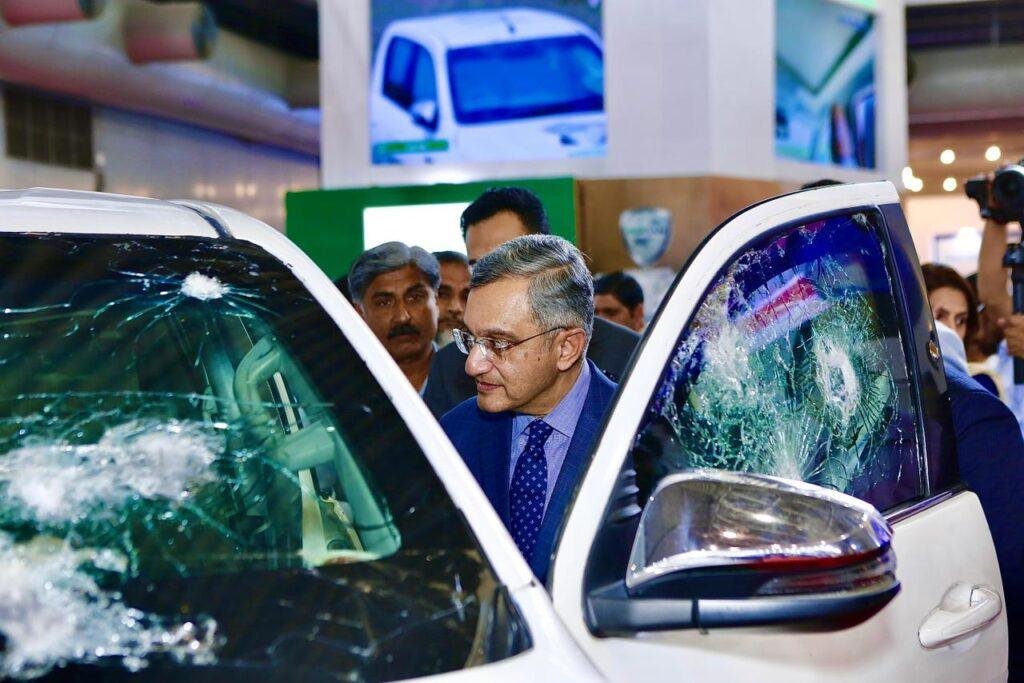
Does Armored Glass Break?
Yes.
Even when successfully stopping bullets, armored glass often develops:
- Spider-web cracks
- Surface damage
- Localized impact marks
This is normal.
The goal is not to remain cosmetically perfect but to prevent bullets from penetrating the passenger compartment.
Advantages of Armored Glass
Modern armored glass provides numerous benefits:
- Excellent ballistic protection
- Improved passenger safety
- High optical clarity
- Multi-hit resistance
- Reduced glass fragmentation
- UV protection
- Long service life
- Enhanced security without sacrificing visibility
Common Applications
Armored glass is widely used in:
- Armored SUVs
- Bulletproof sedans
- Cash-in-transit vehicles
- Government transport
- Diplomatic vehicles
- Military platforms
- Police vehicles
- Embassy security fleets
Popular armored vehicles include:
- Toyota Land Cruiser
- Toyota Prado
- Toyota Fortuner
- Toyota Hilux
- Toyota Revo
How Thick Is Armored Glass?
Thickness depends on the protection level.
Typical ranges include:
| Protection Level | Approximate Thickness |
|---|---|
| B4 | 21–24 mm |
| B6 | 38–42 mm |
| B7 | 45–70 mm |
Greater protection generally requires thicker glass and additional structural reinforcement.
Maintenance Tips
Proper maintenance extends the life of armored glass.
Best practices include:
- Clean only with approved non-abrasive products.
- Avoid ammonia-based cleaners.
- Inspect edges regularly.
- Replace damaged seals promptly.
- Never drill or modify the glass.
- Have inspections performed by qualified armored vehicle specialists.
Choosing the Right Armored Glass
Before purchasing an armored vehicle, consider:
✔ Threat assessment
✔ Vehicle purpose
✔ Passenger capacity
✔ Protection level
✔ Certification
✔ Warranty
✔ Manufacturer experience
✔ After-sales support
Choosing the correct protection level ensures safety without adding unnecessary weight or cost.
Why Quality Matters
Not all armored glass is manufactured to the same standards.
Inferior products may:
- Delaminate over time
- Distort visibility
- Fail multi-hit testing
- Lack independent ballistic certification
Working with an experienced armored vehicle manufacturer helps ensure consistent quality, verified protection, and long-term reliability.
Why Choose Pakian Armored Vehicles?
Based on Kasur Raiwind Road, Lahore, Pakistan, Pakian Armored Vehicles specializes in designing and manufacturing premium armored vehicles for government agencies, corporate executives, diplomats, NGOs, and private clients.
Our solutions combine:
- Certified ballistic materials
- Advanced armored glass
- Reinforced steel protection
- Precision engineering
- Customized security solutions
- Professional after-sales support
Every project is tailored to the customer’s specific threat level and operational requirements.
Frequently Asked Questions
Can armored glass stop rifle bullets?
Yes, if it is certified to the appropriate ballistic level, such as B6 or B7.
Is bulletproof glass unbreakable?
No. It may crack when struck, but it is designed to prevent bullet penetration.
How long does armored glass last?
With proper maintenance, high-quality armored glass can remain effective for many years.
Does armored glass reduce visibility?
Modern ballistic glass offers excellent optical clarity with minimal distortion.
Is armored glass installed in all windows?
Yes. Complete vehicle protection requires all windows to meet the specified ballistic protection level.
Final Thoughts
Armored glass is far more than reinforced window glass. It is a sophisticated, multi-layered ballistic protection system engineered to absorb impact, deform bullets, and protect lives during high-risk situations.
Whether you require a B4, B6, or B7 armored vehicle, selecting certified materials and an experienced manufacturer is essential. High-quality armored glass, combined with professional vehicle armoring, provides confidence, security, and peace of mind for those operating in demanding environments.
Ready to Protect What Matters Most?
If you’re looking for a trusted Pakistan armored vehicle manufacturer, Pakian Armored Vehicles offers customized ballistic solutions for SUVs, pickups, sedans, and specialized security vehicles.
Contact our team today to discuss your security requirements, request a consultation, or receive a customized quotation for your next armored vehicle.